





Table of Contents
ToggleHypertension and diabetes are among the most common chronic conditions affecting Medicare beneficiaries in the United States. These diseases often coexist, increase hospitalization risk, and drive substantial healthcare spending.
Traditional episodic care models, where vitals are captured only during clinic visits, may miss gradual deterioration. This is where structured Remote Patient Monitoring (RPM) programs are transforming chronic care.
Through continuous tracking, EWS (Early Warning Score) frameworks, and clinically validated monitoring infrastructure, Dozee provides Medicare-focused RPM programs that aim to improve chronic disease management while aligning with CMS reimbursement models.
Growing Burden of Hypertension & Diabetes in Medicare Populations
According to the Centers for Medicare & Medicaid Services (CMS), more than 60% of Medicare beneficiaries live with two or more chronic conditions. Hypertension and diabetes are among the most prevalent.
Uncontrolled blood pressure increases the risk of stroke, heart failure, and kidney disease. Poorly managed diabetes contributes to cardiovascular complications, neuropathy, and hospital readmissions.
For healthcare systems operating under value-based care contracts, these conditions directly impact:
- Readmission penalties
- Hospital Value-Based Purchasing scores
- Chronic Care Management (CCM) outcomes
- Medicare Advantage performance metrics
Improving longitudinal disease oversight is no longer optional; it is strategic.
What Is Dozee’s Remote Patient Monitoring (RPM)?
Dozee’s RPM platform is designed to support healthcare providers with structured, contactless vital sign monitoring for chronic disease populations.
Unlike traditional hypertension monitoring devices that require active engagement each time, Dozee enables continuous tracking of parameters such as heart rate and respiratory rate, while integrating with external tools like a bp blood pressure machine or a blood pressure monitor.
Dozee also supports:
- EWS-based risk stratification
- NcBP (Non-Cuff Blood Pressure) trend estimation
- Centralized clinical dashboards
- HIPAA-compliant data handling
This model complements traditional hypertension measurement devices rather than replacing them.
How Dozee Supports Hypertension Monitoring
Effective hypertension management requires more than occasional readings.
Continuous Pattern Assessment
Many patients rely on home-based hypertension monitoring devices. However, isolated readings do not provide trend visibility. Continuous tracking allows providers to identify subtle blood pressure fluctuations over time.
NcBP Trend Estimation
NcBP provides trend-based blood pressure insights that complement readings from a bp blood pressure machine or a blood pressure monitor automatic. This allows clinicians to assess patterns without increasing patient burden.
Risk Prioritization Using EWS
EWS aggregates multiple physiological parameters. When blood pressure changes coincide with respiratory or heart rate shifts, clinicians gain a clearer picture of overall risk.
This layered approach enhances decision-making without replacing physician judgment.
Dozee’s Role in Diabetes Care Monitoring
Diabetes management extends beyond glucose monitoring.
Medicare patients with diabetes often experience cardiovascular strain, fluid imbalance, and autonomic changes. Continuous monitoring of heart rate and respiratory trends supports broader metabolic oversight.
Dozee’s RPM infrastructure allows:
- Longitudinal vital sign monitoring
- Structured documentation for CMS billing codes (e.g., CPT 99453–99458)
- Integrated dashboards for chronic disease review
For Medicare Advantage plans and Accountable Care Organizations (ACOs), improved chronic monitoring supports quality measures and cost containment.
Improving Outcomes for Medicare Patients with Dozee RPM
RPM programs that incorporate structured monitoring have been associated with:
- Improved blood pressure control
- Reduced hospital admissions
- Better medication adherence
- Enhanced patient engagement
Continuous tracking increases oversight between visits. This supports timely intervention before complications escalate. For elderly Medicare beneficiaries, simplified technology reduces the need for frequent in-person visits while maintaining clinical visibility.
This aligns with CMS initiatives promoting digital chronic care management and hospital-at-home models.
Benefits of Dozee RPM for Healthcare Providers
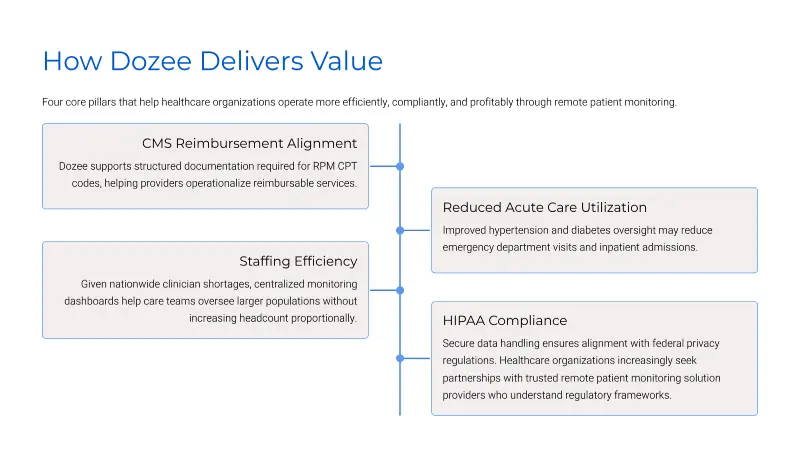
CMS Reimbursement Alignment
Dozee supports structured documentation required for RPM CPT codes, helping providers operationalize reimbursable services.
Reduced Acute Care Utilization
Improved hypertension and diabetes oversight may reduce emergency department visits and inpatient admissions.
Staffing Efficiency
Given nationwide clinician shortages, centralized monitoring dashboards help care teams oversee larger populations without increasing headcount proportionally.
HIPAA Compliance
Secure data handling ensures alignment with federal privacy regulations.
Healthcare organizations increasingly seek partnerships with trusted remote patient monitoring solution providers who understand regulatory frameworks.
Why Dozee Is Ideal for Medicare-Focused RPM Programs
Medicare populations require:
- Simplicity in device interaction
- Secure data handling
- Clinical decision support tools
- Scalable infrastructure
- Compliance with CMS billing guidelines
Dozee’s contactless monitoring approach reduces patient burden. Integration with traditional hypertension measurement devices ensures compatibility with existing workflows.
The platform’s use of EWS and NcBP trend estimation strengthens longitudinal disease assessment while maintaining clinician oversight.
For organizations managing Medicare Advantage, ACO, or value-based contracts, Dozee offers a structured path toward improved chronic care performance.
Conclusion: Dozee Transforming Chronic Care Through RPM
Hypertension and diabetes remain central drivers of Medicare healthcare costs. Episodic monitoring alone is insufficient to address these chronic conditions. Structured RPM programs built around Continuous tracking, EWS frameworks, and integration with established hypertension monitoring devices provide a more proactive approach.
By supporting both patient engagement and provider oversight, Dozee helps healthcare organizations strengthen chronic disease outcomes while aligning with CMS reimbursement pathways.
As value-based care models expand, scalable RPM infrastructure will become foundational to chronic disease management. Dozee stands positioned among trusted remote patient monitoring solution providers advancing safer, more structured Medicare care.
FAQs
Clinically validated upper-arm cuff devices are generally recommended. A blood pressure monitor automatic used consistently under medical guidance is appropriate for most patients.
Yes. RPM systems must comply with HIPAA standards, ensuring encrypted data transmission and secure storage.
RPM improves chronic disease oversight, supports CMS reimbursement codes, and may reduce acute care utilization.
Telehealth includes virtual consultations, glucose data review, and structured remote monitoring programs.
They include virtual visits, RPM programs, Chronic Care Management (CCM), and hospital-at-home initiatives.