


Table of Contents
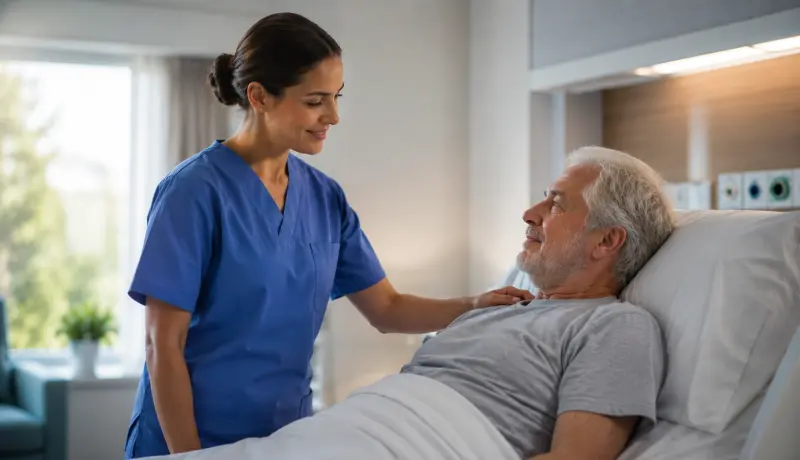
ToggleImagine a hospital bed that quietly listens to every heartbeat and breath; no wires, no probes, no disruption. That’s Dozee: a contactless remote patient monitoring platform that transforms ordinary mattresses into continuous readers of vital signs.
From hospitals focused on preventing emergencies to families seeking peace of mind, Dozee delivers invisible intelligence that supports safer, smarter care. By combining contactless sensing, analytics, and clinical validation, Dozee is redefining how vital signs are monitored across hospitals, skilled nursing facilities, and homes.
The Invisible Sensor Revolution
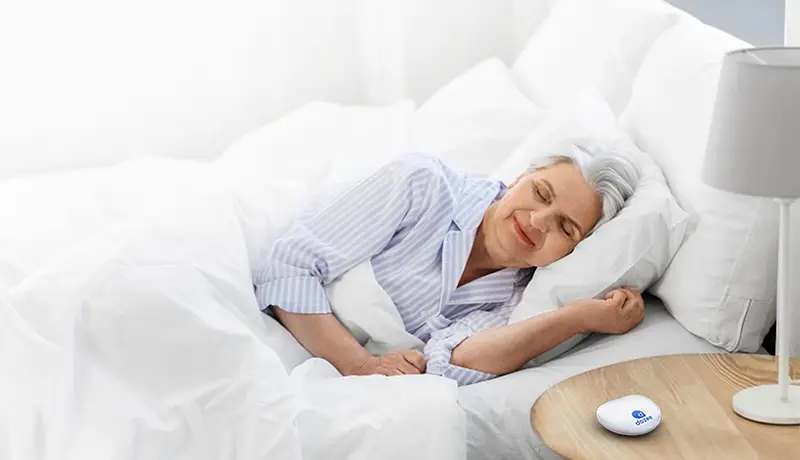
Dozee introduces a fundamental shift in patient monitoring, measuring vital signs without touching the patient. A thin sensor sheet placed under the mattress uses ballistocardiography (BCG) to capture micro-vibrations generated by heartbeats, breathing, and movement.
These signals are processed by proprietary algorithms and converted into clinical metrics such as heart rate, respiratory rate, blood pressure trends, and SpO₂, with accuracy reported up to 98.4% compared to medical-grade devices.
Unlike traditional monitoring that relies on intermittent manual checks and wired sensors, Dozee captures vital signs continuously and unobtrusively. Patients sleep undisturbed, while clinicians receive uninterrupted insight, improving comfort, compliance, and safety.
All data flows securely through Dozee’s HIPAA- and ISO-compliant SecureRPM platform, creating a seamless layer of continuous clinical visibility.
From Mattress to Medical Insights
Dozee’s strength lies in how effortlessly raw data becomes actionable insight. The under-mattress sensor captures signals, which are processed in the cloud and displayed as clear trends, scores, and alarms on a centralized dashboard.
Clinicians can view vitals, historical trends, and risk indicators via desktop or mobile devices. Crucially, Dozee integrates with leading EMRs such as PointClickCare and MatrixCare, enabling documentation and eliminating manual charting errors.
The result: less time on paperwork, more time for patient care.
Tracking What Matters - 24/7
Vital signs don’t follow schedules, and neither does Dozee. The platform continuously monitors heart rate, respiratory rate, blood pressure trends, oxygen saturation, movement, and bed occupancy, without probes or wearables.
This is especially valuable in general wards and post-acute settings, where intermittent checks can miss early signs of deterioration. Studies from general-ward deployments show significant reductions in routine monitoring time, allowing nurses to spend more time on direct patient care. Over 80% of patients also report improved comfort and experience.
With Dozee, monitoring becomes continuous, consistent, and reliable, day and night.
Catching Risks Early: Dozee’s Early Warning System (EWS)
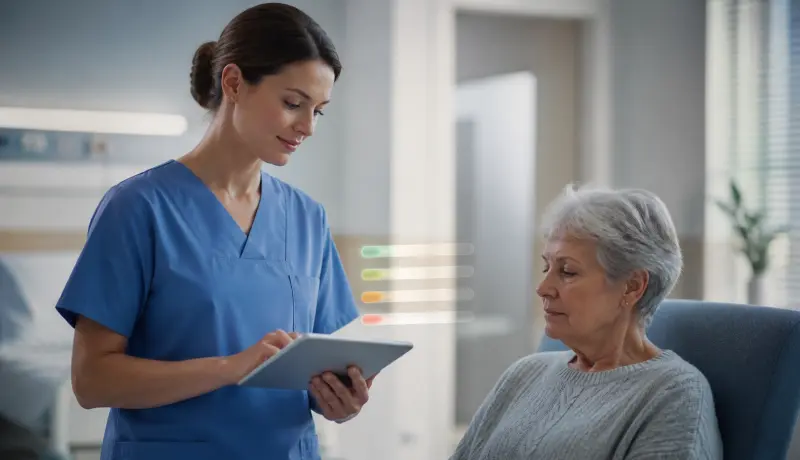
Dozee doesn’t just track vitals; it interprets trends. Its Early Warning System analyzes changes over time to generate risk scores and alarms clinicians before conditions escalate.
In large hospital deployments, Dozee has demonstrated the ability to detect over 90% of patient deteriorations, often 12-16 hours earlier than traditional observation methods. In one multi-bed deployment, hospitals reported zero Code Blue events over a 90-day period after implementation.
By shifting care from reactive to proactive, Dozee gives clinicians the most valuable resource in healthcare: time.

Always Learning, Always Improving
Dozee is designed to improve continuously. As more patients are monitored, the platform refines its algorithms, thresholds, and workflows based on real-world data.
Hospitals report that monitoring saves up to 2.5 nursing hours per patient per day, time that can be reinvested into rounds, documentation quality, and patient engagement. Large hospital networks have scaled Dozee rapidly, reflecting both clinical trust and operational value.
This continuous learning loop ensures Dozee grows smarter, more accurate, and more effective over time.
Clinical Validation and Regulatory Confidence
Dozee’s contactless monitoring system is US FDA-510(k) cleared, validating its safety and effectiveness for clinical use. Accuracy studies report performance comparable to medical-grade monitoring devices, reinforcing trust among clinicians.
This combination of regulatory clearance and real-world evidence positions Dozee not as experimental technology, but as a reliable clinical infrastructure.
Beyond Hospitals: Home & Skilled Nursing Care
Dozee’s under-mattress design makes it ideal for home healthcare and skilled nursing facilities. Installation is simple, non-intrusive, and scalable, turning any bed into a smart monitoring platform.
For providers, Dozee supports CMS billing for Remote Patient Monitoring, enabling financial sustainability. For families, transparent reporting and continuous oversight provide reassurance, especially during night hours or low-staff periods.
Today, Dozee is trusted by 300+ hospitals, monitoring 18,000+ beds and 500,000+ patients, while saving millions of nursing hours and improving safety across care settings.
Dozee vs. Traditional Monitoring
Traditional monitoring relies on periodic checks, manual charting, and wired devices, creating gaps in visibility and increasing staff workload. Dozee replaces snapshots with continuous, contactless data, documentation, and early warnings.
The result is fewer missed deteriorations, better patient comfort, improved staff efficiency, and stronger clinical outcomes; all without adding burden to care teams.
Conclusion
Dozee transforms patient monitoring from intermittent observation to continuous, intelligent care. By combining contactless sensing, analytics, and clinical validation, it enables safer monitoring, earlier intervention, and more efficient workflows.
Whether in hospitals, skilled nursing facilities, or homes, Dozee turns beds into silent caregivers, delivering round-the-clock insight without disruption.
Experience the future of patient monitoring. Book a Dozee demo today.
FAQs
They analyze vital sign trends to identify patients at risk of deterioration, enabling early intervention.
Early Warning Score quantifies patient risk based on vital signs and trends to guide timely clinical action.
Telehealth delivers care remotely via communication tools; RPM focuses on continuous physiological monitoring using sensor sheets like Dozee.
RPM devices can be FDA-cleared. Dozee’s sensor system holds US FDA-510(k) clearance.
Dozee is a remote patient monitoring platform provider enabling continuous, contactless vital sign tracking for healthcare systems.