




Table of Contents
ToggleThe US healthcare system enters 2026 under significant strain. Financial pressure, workforce shortages, and regulatory scrutiny continue to reshape the hospital and post-acute landscape. Many of the biggest healthcare problems facing providers today are systemic, not episodic.
To navigate the next decade successfully, healthcare leaders must identify the major challenges in healthcare and adopt structured, scalable solutions that align with CMS reimbursement models and value-based care expectations.
Why 2026 Is a Turning Point for the Healthcare Industry
The hospital healthcare industry challenges 2025 exposed structural vulnerabilities: staffing instability, margin erosion, and preventable deterioration events.
In 2026, the industry faces a strategic pivot:
- Shift from reactive to proactive monitoring
- Strengthen compliance and data governance
- Improve workforce efficiency
- Align technology investments with ROI
This is no longer about incremental upgrades. It is about systemic transformation.
Top 10 Healthcare Challenges to Solve in 2026
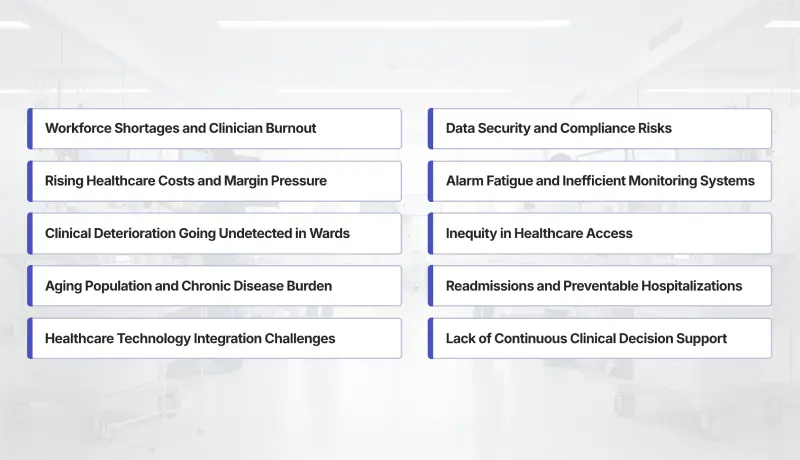
Workforce Shortages and Clinician Burnout
The nursing shortage remains one of the major challenges in healthcare. High patient-to-nurse ratios increase stress and elevate risk.
Burnout is not just emotional fatigue, it is operational overload caused by manual workflows, documentation burden, and inefficient monitoring systems.
Structured monitoring solutions and Continuous tracking models can help redistribute workload more effectively.
Rising Healthcare Costs and Margin Pressure
Hospitals continue to operate under narrow margins. CMS reimbursement reforms and value-based purchasing penalties increase financial accountability.
Reducing preventable ICU transfers, readmissions, and extended length of stay is essential for cost control.
Technology must demonstrate measurable ROI, not simply innovation appeal.
Clinical Deterioration Going Undetected in Wards
One of the most critical biggest healthcare problems is delayed recognition of patient decline.
Subtle physiologic changes, such as respiratory rate shifts, heart rate abnormalities, or NCBP fluctuations, often precede major events.
EWS (Early Warning Score) frameworks aggregate vital parameters into structured risk indicators, supporting earlier prioritization without replacing clinical judgment.
Aging Population and Chronic Disease Burden
By 2030, one in five Americans will be over 65. Chronic diseases such as heart failure, COPD, and diabetes increase monitoring complexity.
Traditional episodic vital checks may not adequately address evolving needs. Continuous tracking strengthens oversight for high-risk populations.
Healthcare Technology Integration Challenges
Among the top healthcare technology challenges is integration fragmentation.
Many hospitals struggle with:
- Siloed data systems
- Inconsistent EHR interoperability
- Limited cross-continuum visibility
These technology challenges in healthcare hinder operational efficiency and care coordination.
Solutions must integrate seamlessly into existing clinical workflows.
Data Security and Compliance Risks
Cybersecurity remains a critical risk area. HIPAA compliance, SOC 2 certification, and secure cloud architecture are non-negotiable.
Healthcare organizations must protect patient data while maintaining accessibility for care teams.
Security failures damage both financial stability and patient trust.
Alarm Fatigue and Inefficient Monitoring Systems
High notification volumes can desensitize staff and increase stress.
Structured monitoring systems that prioritize clinically meaningful trends, rather than excessive device noise, help mitigate fatigue.
Improving signal-to-noise ratio is essential for sustainable monitoring practices.
Inequity in Healthcare Access
Rural communities and underserved populations face barriers to specialty care.
Remote monitoring solutions extend oversight beyond hospital walls, improving access without increasing physical infrastructure demands.
Bridging geographic gaps remains a pressing healthcare issue and solution priority.
Readmissions and Preventable Hospitalizations
Under HRRP penalties, readmissions carry financial consequences.
Continuous monitoring across care transitions strengthens early detection of decline and supports post-discharge follow-up.
Reducing preventable hospitalizations remains a top value-based care objective.
Lack of Continuous Clinical Decision Support
Many care environments still rely on intermittent vital collection.
Without structured trend analysis, early deterioration may go unnoticed.
Integrating EWS-based monitoring strengthens clinical visibility and supports proactive intervention.
The Role of Healthcare Technology in Solving Industry Challenges
Technology alone does not solve healthcare problems, but structured deployment does.
Effective healthcare issues and solutions require:
- Interoperable monitoring platforms
- CMS-aligned reimbursement frameworks
- HIPAA-compliant data management
- EWS prioritization
- Continuous tracking capabilities
When integrated thoughtfully, remote monitoring systems can address staffing shortages, cost pressures, and deterioration risks simultaneously.
Companies Providing Free Medical Readiness Tools
Several organizations and public health entities provide no-cost resources to improve preparedness:
- CDC infection prevention toolkits
- CMS quality reporting dashboards
- AHRQ patient safety checklists
- Nonprofit organizations offering training modules
These companies providing free medical readiness tools help hospitals and SNF strengthen operational resilience without large capital investment.
However, scalable monitoring infrastructure often requires collaboration with specialized vendors.
What Healthcare Leaders Should Prioritize in 2026
Healthcare executives should focus on:
- Workforce stabilization strategies
- Monitoring systems that reduce manual burden
- Risk mitigation through structured EWS frameworks
- Compliance-first technology investments
- Cross-continuum care visibility
Strategic adoption of scalable monitoring platforms can help organizations address multiple major challenges in healthcare simultaneously.
2026 is less about experimentation and more about disciplined implementation.
FAQs
Invest in preventive care, structured monitoring systems, workforce support, and value-based care alignment.
It is a device used to collect and transmit physiologic data for clinician review outside traditional hospital settings.
No. Telehealth focuses on virtual visits, while RPM supports ongoing physiologic data monitoring.
Reviews patient data trends, coordinates interventions, and communicates with care teams.
When implemented properly, RPM can strengthen early detection of deterioration and improve care continuity.