


Table of Contents
ToggleHealthcare delivery in the United States is shifting from episodic care to longitudinal oversight. With rising chronic disease rates, staffing shortages, and expanded value-based reimbursement models, providers are adopting remote health monitoring to strengthen care continuity.
One of the most transformative developments in this space is contactless remote patient monitoring. By reducing reliance on manual vitals collection and enhancing physiological oversight, modern RPM systems are becoming essential infrastructure across hospitals, Skilled Nursing Facilities(SNF), and outpatient practices.
What Does RPM Stand for in Medical?
A common question is: what does rpm stand for medical terminology?
RPM stands for Remote Patient Monitoring. Under CMS guidelines, RPM refers to the collection and evaluation of physiological data from patients outside traditional clinical settings using FDA-cleared devices and structured clinical oversight.
RPM supports Medicare reimbursement under CPT codes such as 99453, 99454, and 99457 when implemented in compliance with documentation and supervision requirements.
What is Remote Patient Monitoring of Vital Signs?
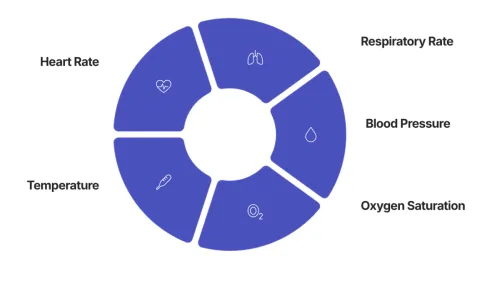
Remote patient monitoring of vital signs involves collecting key physiological data such as:
- Heart rate
- Respiratory rate
- Blood pressure
- Oxygen saturation
- Temperature
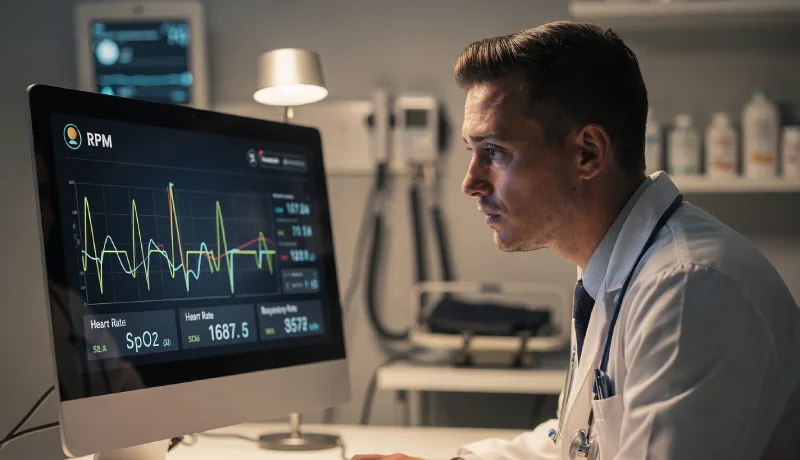
These data points are transmitted securely to clinicians for review.
Clinical Importance of Early Deterioration Detection
Clinical deterioration rarely occurs suddenly. Subtle shifts in respiratory rate or heart rate may precede hospitalization.
Continuous tracking enables earlier recognition of trends that may indicate infection, cardiac strain, or metabolic imbalance. Structured review of aggregated data strengthens decision-making without replacing clinical judgment.
What is Contactless Remote Patient Monitoring?
Traditional RPM often relies on patient-operated devices. In contrast, contactless remote patient monitoring captures physiologic signals without requiring patients to actively measure themselves.
Contactless systems typically use sensor-based platforms placed under or near the patient, allowing passive collection of cardiopulmonary data.
This model reduces patient burden, improves compliance, and supports broader oversight, especially in elderly or high-acuity populations.
How Do Contactless RPM Devices Work?
Contactless systems use advanced sensor technology to detect subtle physiological movements associated with cardiac and respiratory activity.
These systems:
- Capture micro-vibrations generated by heartbeats and breathing
- Convert those signals into measurable vital parameters
- Transmit data securely to an RPM platform
- Allow clinicians to review trends and EWS scores
EWS (Early Warning Score) aggregates multiple vital parameters to help prioritize patients based on combined physiologic changes.
Some platforms may also support NCBP trend estimation to complement traditional cuff-based blood pressure readings.
Types of Remote Patient Monitoring (RPM) Devices
Traditional Physiologic Devices
These include:
- Blood pressure cuffs
- Pulse oximeters
- Glucometers
- Weight scales
They are widely used in chronic disease management.
Contactless Monitoring Systems
Contactless systems support passive cardiopulmonary monitoring without requiring patient interaction. These systems are increasingly used in hospitals and skilled nursing facilities.
Implantable or Cardiac Monitoring Devices
These include implantable loop recorders and other cardiac rhythm monitoring tools used for high-risk patients.
Each category plays a role within broader rpm solution frameworks.
What is an RPM Solution? (Beyond Just Devices)
An effective rpm solution extends beyond hardware. It includes:
- FDA-cleared remote patient monitoring rpm devices
- HIPAA-compliant data transmission
- Clinical dashboards
- EHR integration
- Documentation workflows aligned with CMS reimbursement
An RPM solution integrates people, process, and technology into a structured care model.
What Are RPM Platforms in Healthcare?
RPM platforms are centralized software systems that:
- Aggregate data from monitoring devices
- Display longitudinal trends
- Support EWS-based prioritization
- Facilitate billing documentation
These platforms are foundational to scaling rpm services healthcare programs across large health systems.
They enable structured oversight while reducing manual documentation burden.
RPM Services in Healthcare: Who Uses Them?
RPM services healthcare programs are used by:
- Primary care practices
- Cardiologists
- Endocrinologists
- Hospitals
- Skilled nursing facilities
- Home health agencies
Medicare beneficiaries with hypertension, heart failure, COPD, and diabetes are among the most common participants.
Under CMS regulations, RPM services require clinician oversight and documented care management time.
Benefits of Contactless Remote Health Monitoring
Clinical Benefits:
- Earlier identification of deterioration
- Improved chronic disease oversight
- Reduced avoidable hospital admissions
- Strengthened post-discharge monitoring
Operational Benefits:
- Reduced manual vital sign collection
- Improved staff efficiency
- Enhanced documentation compliance
- Better resource allocation
Patient Benefits:
- Reduced need for frequent clinic visits
- Improved comfort through contactless monitoring
- Greater confidence in care continuity
- Reduced burden of self-measurement.
These benefits align with value-based care objectives and patient-centered care models.
Real-World Impact of Modern RPM Systems
Clinical studies have shown that structured RPM programs can:
- Improve blood pressure control
- Reduce readmissions in heart failure populations
- Enhance chronic disease documentation
- Support Medicare Advantage quality metrics
As workforce shortages continue and chronic disease prevalence rises, modern RPM systems provide scalable oversight solutions.
Contactless RPM models further reduce compliance barriers, particularly among elderly patients who may struggle with device operation.
Conclusion
Remote Patient Monitoring has evolved significantly. Today’s contactless remote patient monitoring systems extend beyond manual devices to provide Continuous tracking and structured physiologic oversight.
By integrating FDA-cleared devices, secure rpm platforms, and EWS-based prioritization, modern RPM solutions support earlier deterioration detection and operational efficiency.
For providers operating within CMS reimbursement frameworks and HIPAA compliance standards, RPM represents a strategic investment in safer, more sustainable care delivery.
FAQs
It is a monitoring model that captures physiologic data without requiring patients to actively measure themselves.
They use sensor-based technology to detect cardiac and respiratory activity and transmit structured data for clinician review.
They detect subtle body movements associated with heartbeats and breathing, converting them into measurable vital parameters.
Yes. Medicare covers RPM services under specific CPT codes when documentation requirements are met.
Physiologic monitoring (RPM), therapeutic monitoring (RTM), telehealth consultations, and implantable cardiac monitoring.
Improved chronic disease management, earlier detection of deterioration, enhanced operational efficiency, and stronger quality performance.