
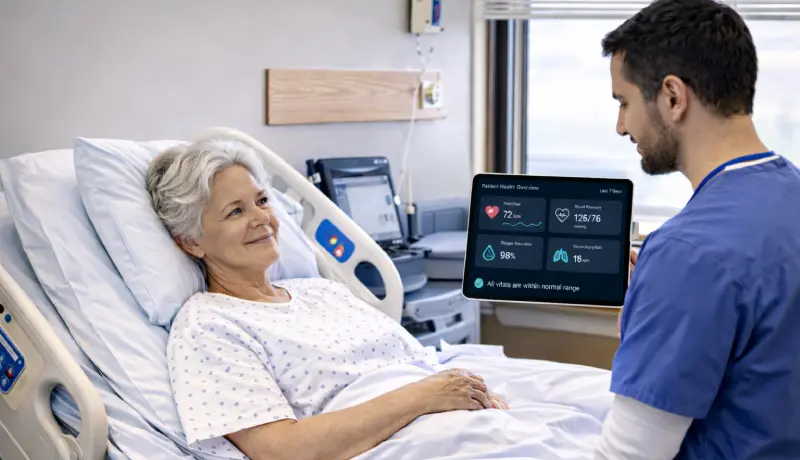



Skilled Nursing Facilities (SNF) are increasingly adopting structured monitoring frameworks to improve detection of clinical deterioration. As resident acuity rises and staffing shortages persist across the United States, facilities are seeking scalable methods to strengthen patient oversight.
One approach gaining attention is the use of Early Warning Systems (EWS), particularly the MEWS early warning system, a scoring framework originally developed for hospital wards. While MEWS has demonstrated value in acute care settings, its use in long-term care environments requires careful interpretation.
Observational studies and field experiences suggest that while MEWS based monitoring can support deterioration detection, SNF must consider the unique physiological characteristics of elderly residents and the operational realities of long-term care.
Why Early Warning Systems Are Expanding into Skilled Nursing Facilities
SNF today cares for residents with multiple chronic conditions, including cardiovascular disease, respiratory disorders, and metabolic illnesses. Many residents transition directly from hospital stays, often remaining clinically fragile.
Several factors are driving interest in EWS adoption within long-term care:
- Increasing patient acuity in SNF
- Rising regulatory scrutiny under CMS quality programs
- Workforce shortages among nursing staff
- Financial incentives tied to reducing hospital readmissions
Early Warning Systems provide a structured framework for interpreting physiological changes and prioritizing clinical attention. When supported by monitoring technologies that enable continuous tracking, EWS frameworks can help staff identify deterioration patterns earlier than periodic vital checks alone.
What Is the MEWS Early Warning System?
The mews early warning system, also known as the mews modified early warning system, is a clinical scoring model designed to identify patients at risk of deterioration.
The MEWS Tool evaluates several physiological parameters and assigns a score based on deviation from normal ranges.
The standard mews early warning scoring system typically assesses:
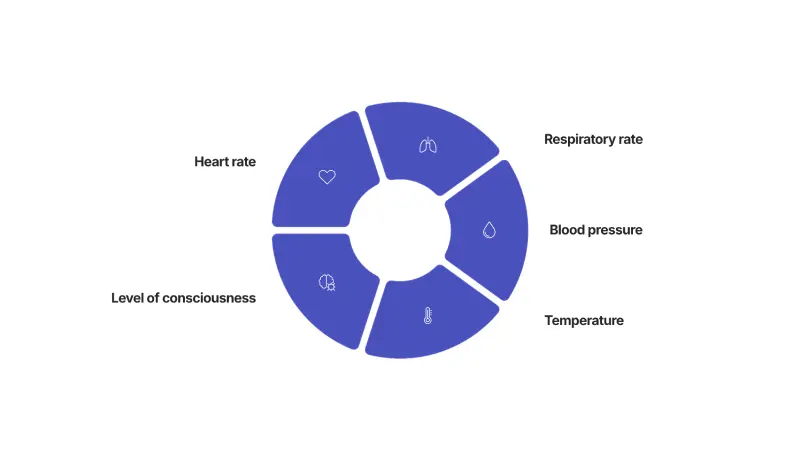
The resulting mews scoring system modified early warning score provides clinicians with an indicator of potential deterioration risk.
In hospital environments, MEWS scoring helps guide escalation decisions and clinical interventions.
MEWS Score Interpretation in Long-Term Care Settings
While MEWS has demonstrated clinical utility, ews score interpretation in SNF requires contextual awareness.
Elderly residents often have baseline physiological values that differ from those of hospital patients. Chronic disease, medication regimens, and functional status can influence vital patterns.
For example:
- Some residents may have persistently elevated heart rates due to chronic conditions.
- Respiratory rates may fluctuate in individuals with COPD.
- NCBP values may vary based on medication adjustments.
For these reasons, MEWS scoring in long-term care settings should be interpreted alongside clinical judgment rather than used as a standalone indicator.
Observational Concerns in SNF Implementation
Baseline Variability in Elderly Residents
Residents in SNF often have complex medical histories that influence physiological baselines. Standard scoring thresholds developed for acute care populations may not fully reflect these variations.
This variability can complicate interpretation of the mews modified early warning system.
False Positives and Monitoring Fatigue
When scoring systems produce frequent triggers that do not correspond to clinical deterioration, staff may experience monitoring fatigue.
Facilities must carefully balance sensitivity with clinical relevance when implementing EWS frameworks.
Limited Escalation Infrastructure
Hospitals typically have rapid response teams and advanced monitoring capabilities. SNF may have fewer on-site clinical resources, which can affect escalation workflows.
This difference underscores the need for monitoring strategies tailored to long-term care environments.
Limitations of Manual MEWS Early Warning Scoring Systems
Traditional MEWS implementations rely on manual vital collection and score calculation.
This approach presents several challenges:
- Vital measurements may occur only every few hours
- Manual calculation increases documentation burden
- Trends between measurements may be missed
Manual scoring also depends heavily on staff availability and workflow capacity.
In facilities experiencing staffing shortages, these limitations may reduce the effectiveness of purely manual scoring approaches.
Early Warning Tracking Devices vs Manual Scoring
Monitoring technologies are increasingly used to support EWS frameworks.
An early warning tracking device can capture physiological parameters such as heart rate and respiratory rate continuously. These systems may also integrate NCBP monitoring through additional devices.
Compared with manual scoring methods, monitoring platforms provide:
- More consistent physiological observation
- Improved visualization of patient trends
- Reduced documentation burden for nursing staff
These capabilities can strengthen the effectiveness of EWS frameworks when integrated into clinical workflows.
Early Alert Bed Alarm Systems - What They Do and Don’t Do
Some facilities use early alert bed alarm systems to identify patient movement or bed exits. While these systems may support resident safety monitoring, they are not designed to detect physiological deterioration.
Bed alarm technologies typically focus on:
- Motion detection
- Bed occupancy changes
- Resident movement patterns
In contrast, EWS frameworks rely on physiological data such as heart rate, respiratory rate, and NCBP trends.
Understanding the distinction between these systems helps administrators select appropriate monitoring tools.
Lessons Learned from Observational Findings
Observational studies of EWS use in long-term care settings highlight several lessons.
First, scoring frameworks must be adapted to the physiological characteristics of elderly populations.
Second, monitoring technologies that enable continuous tracking can improve visibility into patient status compared with intermittent vital checks.
Third, staff education is essential to ensure accurate interpretation of scoring outputs.
Facilities that combine structured scoring frameworks with monitoring technologies and clinical judgment may achieve stronger outcomes.
Balancing Caution with Innovation
While EWS frameworks offer significant potential benefits, careful implementation is essential.
Healthcare leaders should avoid viewing scoring systems as replacements for clinical judgment. Instead, EWS should function as a decision-support tool that complements nursing expertise.
Successful programs typically involve:
- Staff training on score interpretation
- Integration with existing care workflows
- Monitoring technologies that support physiological observation
This balanced approach helps facilities maintain patient safety while adopting new technologies responsibly.
Recommendations for Skilled Nursing Facilities
For SNF administrators considering EWS adoption, several practical steps can support effective implementation:
- Evaluate monitoring infrastructure and physiological data availability
- Train staff on ews score interpretation and clinical context
- Integrate EWS frameworks with monitoring technologies when possible
- Establish clear escalation protocols
These strategies help ensure that monitoring programs support both clinical safety and operational efficiency.
Future Direction: Evolving Beyond Static Scoring
As monitoring technologies continue to evolve, the role of EWS frameworks in long-term care is likely to expand.
Future approaches may include:
- Greater integration with monitoring platforms
- Improved interpretation of physiological trends
- Expanded use of monitoring technologies in SNF
For facilities facing rising patient acuity and workforce challenges, these developments may support safer and more proactive care delivery.
FAQs
Several healthcare technology platforms provide EWS scoring tools integrated with monitoring systems and electronic health records.
EWS refers to a structured scoring framework used to detect early signs of clinical deterioration by evaluating multiple physiological parameters.
MEWS typically evaluates heart rate, respiratory rate, blood pressure, temperature, and level of consciousness.
Yes. The Modified Early Warning Score is one of the most widely used early warning scoring systems in clinical care.
Challenges include interpretation of scores in elderly populations, monitoring fatigue, and integration with clinical workflows.