
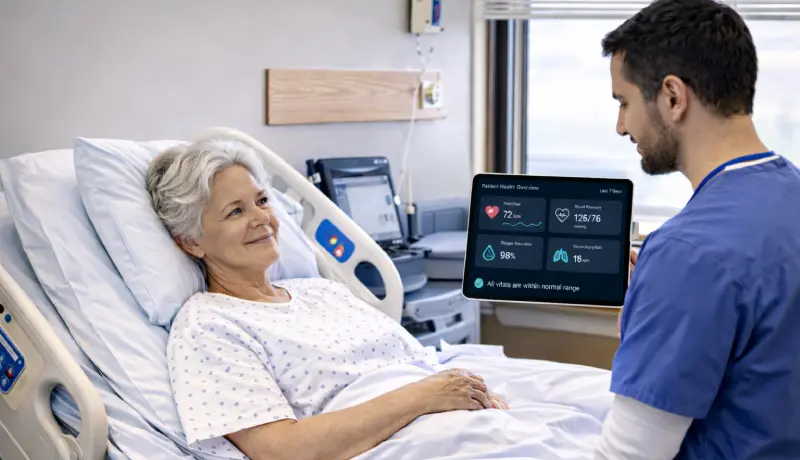
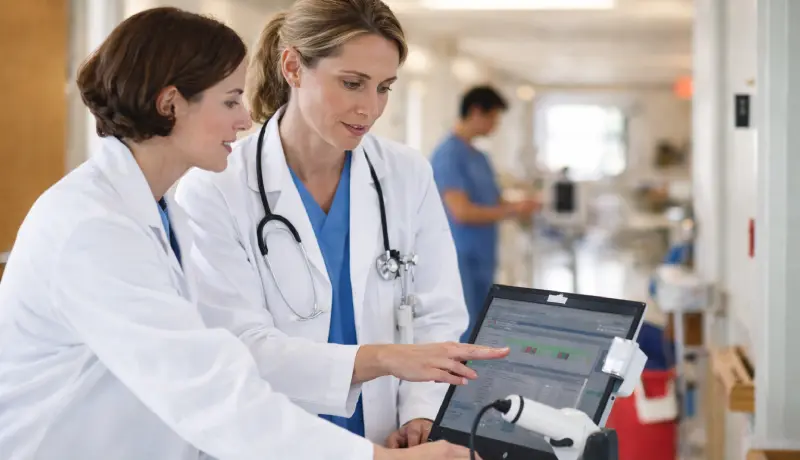


Remote patient monitoring (RPM) has moved from a niche innovation to a core component of modern healthcare delivery in the United States. Hospitals, physician groups, and Skilled Nursing Facilities (SNF) are increasingly adopting rpm monitoring system platforms to improve visibility into patient health while managing workforce constraints.
RPM enables clinicians to observe physiologic indicators such as heart rate, respiratory rate, oxygen saturation, and blood pressure through NCBP measurement. With continuous tracking, clinicians gain insight into patient health trends between in-person evaluations, supporting more informed clinical decisions.
As value-based care models continue to evolve, understanding key remote patient monitoring statistics is critical for healthcare leaders evaluating technology investments and care delivery strategies.
Why RPM Statistics Matter in 2026
Healthcare organizations in 2026 are operating in an environment defined by staffing shortages, rising patient acuity, and increasing regulatory oversight. Decision-makers require measurable outcomes to justify technology adoption.
Key facts about remote monitoring help answer important questions:
- Does RPM improve rpm patient safety?
- Can monitoring reduce avoidable hospital transfers?
- What operational efficiencies can be achieved?
These remote patient monitoring outcomes are particularly relevant as CMS reimbursement increasingly aligns with quality metrics, readmission rates, and overall patient outcomes.
Section 1: RPM Market Growth and Adoption Trends
Remote Patient Monitoring Market Size and Growth
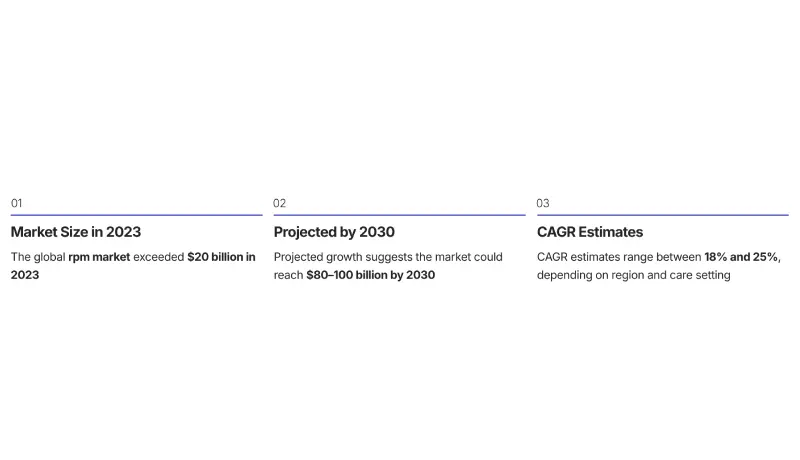
The remote patient monitoring market size has grown significantly over the past decade, driven by demand for chronic disease management and post-acute care solutions.
Recent industry reports estimate:
In the United States, RPM adoption is expanding across hospitals, outpatient practices, and long-term care facilities. SNF, in particular, are emerging as a major growth segment due to increasing patient complexity and regulatory pressure.
Adoption Rates Across Care Settings
Adoption of RPM is no longer limited to early adopters.
Recent remote patient monitoring statistics indicate:
- Approximately 70–80% of healthcare organizations are implementing or evaluating RPM programs
- Significant growth in post-acute and long-term care adoption
- Transition from pilot programs to enterprise-wide infrastructure
This shift reflects a broader industry trend where monitoring technologies are becoming embedded in routine care delivery.
Section 2: RPM Patient Safety and Clinical Outcomes
RPM Patient Safety Statistics
Improving rpm patient safety is one of the most compelling reasons for RPM adoption.
Clinical observations and studies suggest that monitoring programs can contribute to:
- Earlier identification of physiologic deterioration
- Improved stability in chronic disease management
- Enhanced visibility into patient health trends
By enabling continuous tracking of vital parameters, clinicians can observe gradual changes that may not be captured during periodic vital checks.
Reduction in Readmissions and Acute Transfers
Hospital readmissions remain a key focus for healthcare organizations operating under value-based care models.
RPM programs support clinicians by providing ongoing visibility into patient status, which may help reduce avoidable acute transfers.
Facilities using structured monitoring approaches have reported improvements in readmission rates, particularly among patients with cardiac and respiratory conditions.
Nursing Efficiency and Workflow Improvement
RPM adoption also impacts clinical workflows.
Healthcare organizations implementing rpm monitoring system platforms often report:
- Reduction in manual vital sign collection
- Decreased documentation burden
- Improved prioritization of patient care
Some studies suggest that RPM programs can save 1-2 hours of nursing time per shift, allowing staff to focus on direct patient care.
Alarm Reduction and Monitoring Accuracy
Traditional monitoring systems often generate excessive notifications, which can overwhelm clinical staff.
Modern RPM platforms are designed to improve monitoring accuracy by focusing on meaningful physiologic trends rather than isolated measurements.
This approach supports:
- Better prioritization of patient care
- Reduced monitoring fatigue
- Improved clinical efficiency
Cost Savings from RPM Implementation
From a financial perspective, RPM programs are increasingly viewed as strategic investments.
Cost-saving opportunities associated with RPM include:
- Reduced hospital readmissions
- Lower emergency transfer rates
- Improved staff utilization
For SNF and hospitals operating under CMS reimbursement frameworks, these improvements can contribute to stronger financial performance.
ROI of RPM Monitoring Systems
Healthcare leaders evaluating RPM programs often focus on return on investment (ROI).
Key ROI indicators include:
- Reduction in avoidable hospitalizations
- Improved staff productivity
- Enhanced patient outcomes
Over time, many organizations transition from pilot programs to full-scale implementation as they recognize the long-term value of RPM infrastructure.
Facts About Remote Monitoring Technology
Technology Evolution Statistics
Several important facts about remote monitoring highlight how the technology is evolving:
- Modern systems can track multiple physiologic indicators simultaneously
- Integration with electronic health records is becoming standard
- Monitoring technologies are expanding into long-term care and home-based care
These advancements allow clinicians to combine monitoring data with clinical history, improving care coordination and decision-making.
RPM in Long-Term Care, Why It’s Growing Fastest
Long-term care is one of the fastest-growing segments for RPM adoption.
Key drivers include:
- High prevalence of chronic conditions among SNF residents
- Limited on-site physician availability
- Increasing regulatory oversight from CMS
- Pressure to improve quality metrics such as readmissions
RPM provides SNF with tools to improve patient monitoring while managing limited clinical resources.
What These Statistics Mean for Skilled Nursing Facilities
For Skilled Nursing Facilities, the growing body of remote patient monitoring outcomes data provides actionable insights.
RPM programs can support:
- Improved patient safety monitoring
- Better chronic disease management
- Enhanced nursing workflow efficiency
- Stronger alignment with value-based care models
Facilities that adopt RPM strategically, integrating monitoring data into clinical workflows, are better positioned to improve both patient outcomes and operational performance.
FAQs
Recent estimates indicate the global RPM market exceeds $20 billion and continues to grow rapidly, with strong adoption in long-term care settings.
RPM supports continuous tracking of physiologic indicators, enabling clinicians to observe trends that may signal deterioration.
Outcomes include improved chronic disease management, reduced hospital readmissions, and enhanced clinical workflow efficiency.
The future of RPM includes broader adoption across care settings, deeper integration with clinical systems, and expanded monitoring capabilities.
CMS continues to update reimbursement policies related to RPM through the Medicare Physician Fee Schedule.