

Table of Contents
ToggleHealthcare organizations across the United States are navigating one of the most significant workforce disruptions in modern history. Skilled nursing facilities (SNF), hospitals, and post-acute providers face increasing pressure to deliver safe care while facing staffing shortages and rising patient complexity.
In this environment, healthcare leaders are exploring remote patient monitoring solutions and support systems to extend clinical management without increasing staff burden. These technologies are becoming an important component of workforce strategy, particularly for organizations operating under value-based care models that emphasize reducing hospital readmissions, improving quality metrics, and maintaining regulatory compliance.
The Clinical Workforce Crisis in 2026
Healthcare workforce challenges are intensifying due to multiple structural pressures.
Nursing shortages:
The United States continues to face a significant shortage of registered nurses, particularly in long-term care and SNF. Recruitment and retention remain difficult as experienced nurses retire and demand increases.
Physician burnout:
Physicians report high levels of burnout linked to administrative workload, documentation requirements, and growing number of residents.
Rising patient volumes:
As the population ages, healthcare utilization continues to rise across hospitals, rehabilitation facilities, and long-term care settings.
Aging population:
Older adults often live with multiple chronic conditions such as heart failure, COPD, and diabetes; requiring continuous clinical oversight.
Increasing staffing costs:
Labor expenses represent the highest operational cost for many healthcare facilities, creating financial pressure on administrators.
These realities are forcing organizations to rethink how monitoring and care coordination are delivered.
How Workforce Shortages Impact Patient Safety and Operations
When staffing levels decline while patient acuity rises, operational challenges quickly emerge.
Nurses must manage more patients simultaneously, making it difficult to maintain frequent bedside monitoring. Vital checks performed every few hours may miss gradual deterioration between assessments.
This gap can contribute to:
- Delayed identification of clinical deterioration
- Increased risk of emergency transfers
- Higher hospital readmission rates
- Greater documentation burden on nursing teams
Healthcare organizations, therefore, need scalable systems that support clinical oversight while protecting staff capacity.
What Are Remote Monitoring and Support Systems?
Remote monitoring refers to technologies that capture and analyze patient physiological data outside of traditional bedside monitoring infrastructure.
A remote patient monitoring company typically provides a platform combining:
- Remote patient monitoring equipment for vital measurement
- Clinical dashboards for care teams
- Integration with electronic medical records
- Structured monitoring protocols
These systems often incorporate frameworks such as Early Warning Systems (EWS), which evaluate trends in vital parameters like heart rate, respiratory rate, oxygen saturation, and NCBP.
Continuous tracking of these parameters can help clinicians identify potential deterioration patterns earlier than episodic manual checks alone.
How Remote Patient Monitoring Addresses Workforce Gaps
Continuous Surveillance Without Additional Staff
Traditional monitoring requires nurses to conduct repeated bedside checks. Remote patient monitoring technology enables continuous tracking of vital parameters, allowing clinicians to review trends across multiple residents simultaneously.
Prioritized Notifications Instead of Manual Rounds
Instead of reviewing every patient at identical intervals, monitoring systems can highlight patients who require attention based on physiological trends and EWS scoring.
Structured Documentation Support
Many remote patient monitoring solutions integrate documentation features that simplify recording of physiological trends, reducing administrative burden.
Centralized Monitoring Across Units
Monitoring dashboards can provide a facility-wide view of patient status. This centralized visibility supports better prioritization of staff resources across units.
Reducing Avoidable Acute Transfers and Readmissions in Skilled Nursing Facilities
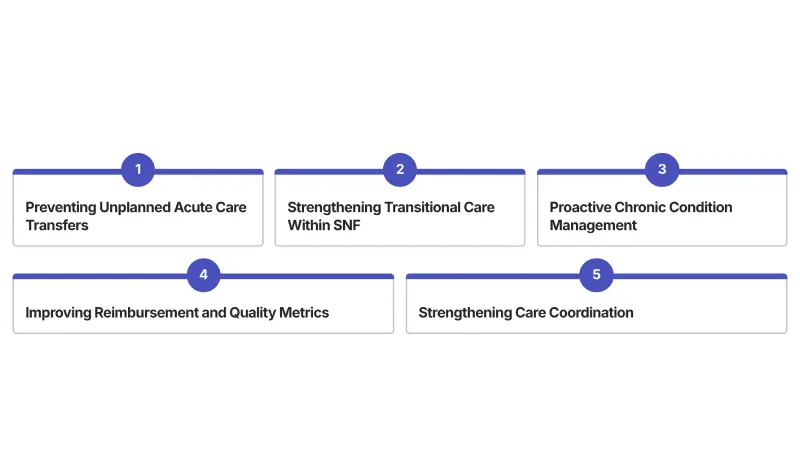
One of the most significant operational benefits of monitoring systems is reducing hospital readmissions and unnecessary transfers.
Preventing Unplanned Acute Care Transfers
Gradual physiological deterioration may occur hours before a clinical crisis. Continuous monitoring allows earlier evaluation and intervention when appropriate.
Strengthening Transitional Care Within SNF
Residents transitioning from hospitals to SNF often remain clinically fragile. Monitoring systems provide additional oversight during this high-risk period.
Proactive Chronic Condition Management
Residents with heart failure, COPD, or diabetes benefit from closer observation of physiological trends.
Improving Reimbursement and Quality Metrics
Under CMS programs such as the Skilled Nursing Facility, Value-Based Purchasing Program, facilities are evaluated partly on hospital readmission rates.
Strengthening Care Coordination
Monitoring data can support communication between SNF staff, physicians, and care coordinators, enabling better alignment of care plans.
Key Remote Patient Monitoring Equipment and Technologies
A typical monitoring ecosystem includes several categories of digital health monitoring devices and platforms.
Common examples include:
- Blood pressure monitoring devices
- Pulse oximeters
- Weight scales for fluid monitoring
- Bedside physiological sensors
- Respiratory monitoring systems
These remote patient monitoring equipment components transmit physiological data to centralized dashboards for clinical review.
Reliable monitoring infrastructure is essential to ensure data accuracy, regulatory compliance, and clinical confidence.
Remote Patient Monitoring Benefits for Healthcare Organizations
Healthcare leaders evaluating RPM often focus on measurable outcomes across three domains.
Clinical Benefits
- Improved visibility into physiological trends
- Earlier identification of deterioration patterns
- Support for chronic disease management programs
Operational Benefits
- Reduced burden on nursing staff
- Improved prioritization of clinical attention
- Enhanced coordination between care teams
Financial Benefits
- Potential reductions in avoidable hospital transfers
- Support for value-based care metrics
- Better resource utilization across clinical teams
These remote patient monitoring benefits make monitoring systems a strategic tool for organizations facing workforce constraints.
Choosing the Right Remote Patient Monitoring Company
Not all platforms deliver the same value. When selecting a remote patient monitoring company, healthcare administrators should evaluate:
- Clinical reliability of monitoring devices
- Integration with EMR systems
- Compliance with HIPAA data protection standards
- Support for EWS frameworks
- Training and onboarding support for nursing teams
A well-designed solution should enhance workflow efficiency rather than create additional complexity.
Barriers to Adoption and How to Overcome Them
Despite growing interest, some organizations face barriers when adopting monitoring systems.
Common challenges include:
Staff adoption concerns:
Clinical teams may initially resist new technologies without adequate training.
Infrastructure limitations:
Older facilities may lack the connectivity or equipment needed to support digital monitoring.
Financial investment considerations:
Administrators must evaluate return on investment and reimbursement opportunities.
Workflow integration:
Monitoring systems must integrate seamlessly with existing documentation processes.
Facilities that address these challenges through training, phased implementation, and leadership engagement are more likely to achieve sustainable results.
The Future of Digital Health Monitoring Devices in Workforce Strategy
As workforce shortages persist, healthcare organizations are increasingly incorporating monitoring technologies into broader care delivery strategies.
Future workforce models may include:
- Greater reliance on remote patient monitoring technology
- Expanded use of digital health monitoring devices in long-term care
- Integrated monitoring across hospitals and post-acute settings
- Stronger alignment with value-based care programs
For many organizations, monitoring systems are evolving from optional tools to essential infrastructure supporting safe and efficient care delivery.
FAQs
Monitoring systems provide visibility into physiological trends, enabling earlier clinical evaluation and potentially preventing avoidable hospital transfers.
Benefits include improved clinical visibility, better staff prioritization, support for chronic disease management, and improved quality metrics.
Common equipment includes blood pressure monitors, pulse oximeters, weight scales, and other digital health monitoring devices.
RPM supports continuous tracking of patient vitals, allowing nurses to oversee more residents efficiently without increasing staff workload.
Facilities should consider device reliability, compliance with healthcare regulations, EMR integration, and training support.