

Table of Contents
ToggleRemote monitoring of patients has become a cornerstone of modern healthcare delivery, especially in Skilled Nursing Facilities (SNF). These settings demand both efficiency and precision, where vulnerable patients require continuous oversight without overwhelming staff. Remote Patient Monitoring (RPM) technologies like Dozee bring measurable improvements to safety, efficiency, and cost savings.
Boost Staff Efficiency with Continuous, Hands-Free Monitoring
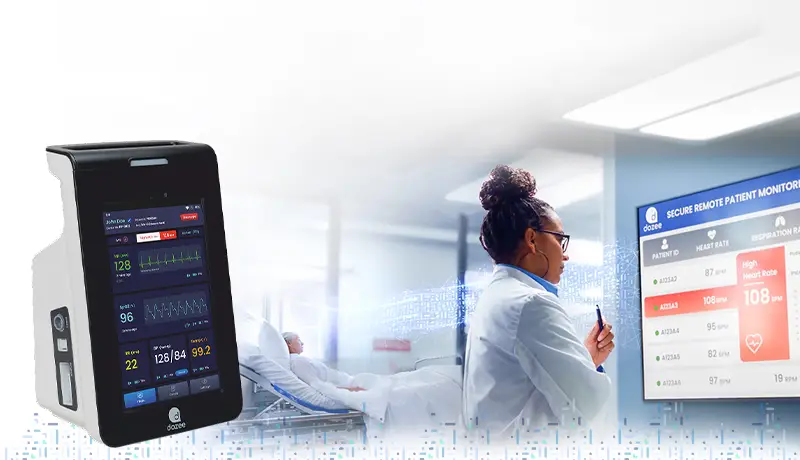
SNF are often challenged by high patient-to-nurse ratios and growing administrative workloads. Dozee provides contactless, continuous monitoring of vital signs, which are heart rate, respiratory rate, blood pressure, and SpO₂. This eliminates the need for frequent manual spot checks.
In real-world deployments, hospitals using Dozee have seen a 70% reduction in nurse workload and stress, enabling staff to dedicate more time to direct patient care and emotional support. This efficiency translates into higher staff satisfaction and better patient engagement.
Prevent Crises with Predictive Early Warning Systems
Preventing medical crises is central to improving long-term outcomes in SNF. Dozee incorporates an Early Warning System (EWS) that uses continuous data streams to flag subtle deterioration in patient health.
Clinical evidence shows that such automated EWS systems achieve 97.4% sensitivity in detecting patient deterioration and provide up to 18 hours of lead time before critical events. By capturing 91% of deteriorating cases early, Dozee allows clinicians to intervene sooner, often before conditions escalate into ICU transfers or emergency hospitalizations.
Enhance Patient Safety Through Continuous Vital Tracking
Unlike periodic checks that risk missing early warning signs, Dozee ensures round-the-clock oversight. This continuous monitoring has resulted in 80% fewer Code Blue events and 60% fewer ICU transfers in facilities where it has been implemented.
For SNF residents, this means safer care, fewer disruptions from hospital transfers, and a more reassuring environment for families. For staff, it delivers confidence that no patient is left unmonitored at any hour.
Lower Costs While Raising Care Quality
Healthcare administrators in Skilled Nursing Facilities face the dual challenge of optimising financial performance while ensuring superior patient outcomes. Dozee addresses both. By reducing unnecessary admissions and ICU stays, it drives measurable cost savings – facilities report up to $1 million saved annually per facility. Continuous monitoring has also delivered 57% shorter ICU stays, directly freeing critical resources.
At the same time, Dozee improves business outcomes through stronger MDS and PDPM performance, value-based savings, and higher QRS ratings. Patients experience 41% higher satisfaction scores and 14% lower treatment costs, while nurses report 70% less stress. Together, these improvements reinforce an SNF’s reputation for quality care and strengthen long-term financial resilience.
Connect Care Teams with Live Remote Updates
Dozee’s platform integrates seamlessly with electronic medical records (EMRs) like PointClickCare and MatrixCare, ensuring vitals and notifications are logged automatically. This reduces manual errors while enabling live remote updates that clinicians can access anytime.
Centralized dashboards also allow physicians, nurses, and caregivers to view patient status trends, track fall risk indicators, and coordinate interventions more effectively. The result is a connected care ecosystem that strengthens teamwork and consistency in patient care.
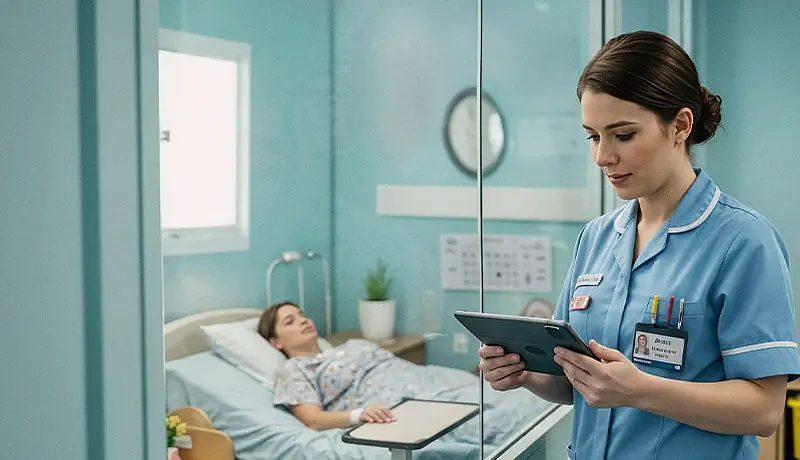
Understanding RPM: Beyond Telehealth
While telehealth focuses on remote consultations, RPM goes further by enabling continuous, data-driven patient monitoring. In SNF, this distinction is critical: telehealth provides access to clinicians, but RPM ensures that care decisions are based on accurate, live patient data collected around the clock.
How Dozee Works: Effortless Monitoring for SNF
Dozee’s contactless sensor sheet is placed beneath the mattress, instantly transforming any bed into a smart monitoring station. The sensor tracks vitals continuously, transmitting data to the Dozee Pod and then to a central dashboard.
For caregivers, the setup is effortless. For patients, it is non-intrusive and comfortable, requiring no wearables or wires. For administrators, it ensures compliance, efficiency, and measurable returns through CMS-recognized RPM and CCM billing codes.
FAQs
Remote Patient Monitoring (RPM) is the use of digital technology to collect vital health data outside traditional clinical settings and transmit it to providers for continuous care.
Yes, RPM is a category within telehealth. However, while telehealth typically involves virtual consultations, RPM emphasizes the collection and continuous monitoring of patient vitals for proactive care.
RPM devices such as Dozee capture patient vitals such as heart rate, respiratory rate, SpO₂, and blood pressure, continuously and securely transfer data to care providers via a centralized platform.
RPM improves patient safety, reduces hospitalizations, lowers costs, enhances staff efficiency, and increases patient satisfaction. In SNF, it translates to measurable outcomes such as fewer Code Blue events, reduced ICU transfers, and lower nurse workload.
An Early Warning System (EWS) uses continuous monitoring data to detect subtle signs of clinical deterioration, allowing interventions before conditions escalate. Dozee’s EWS has been shown to provide up to 18 hours of lead time.